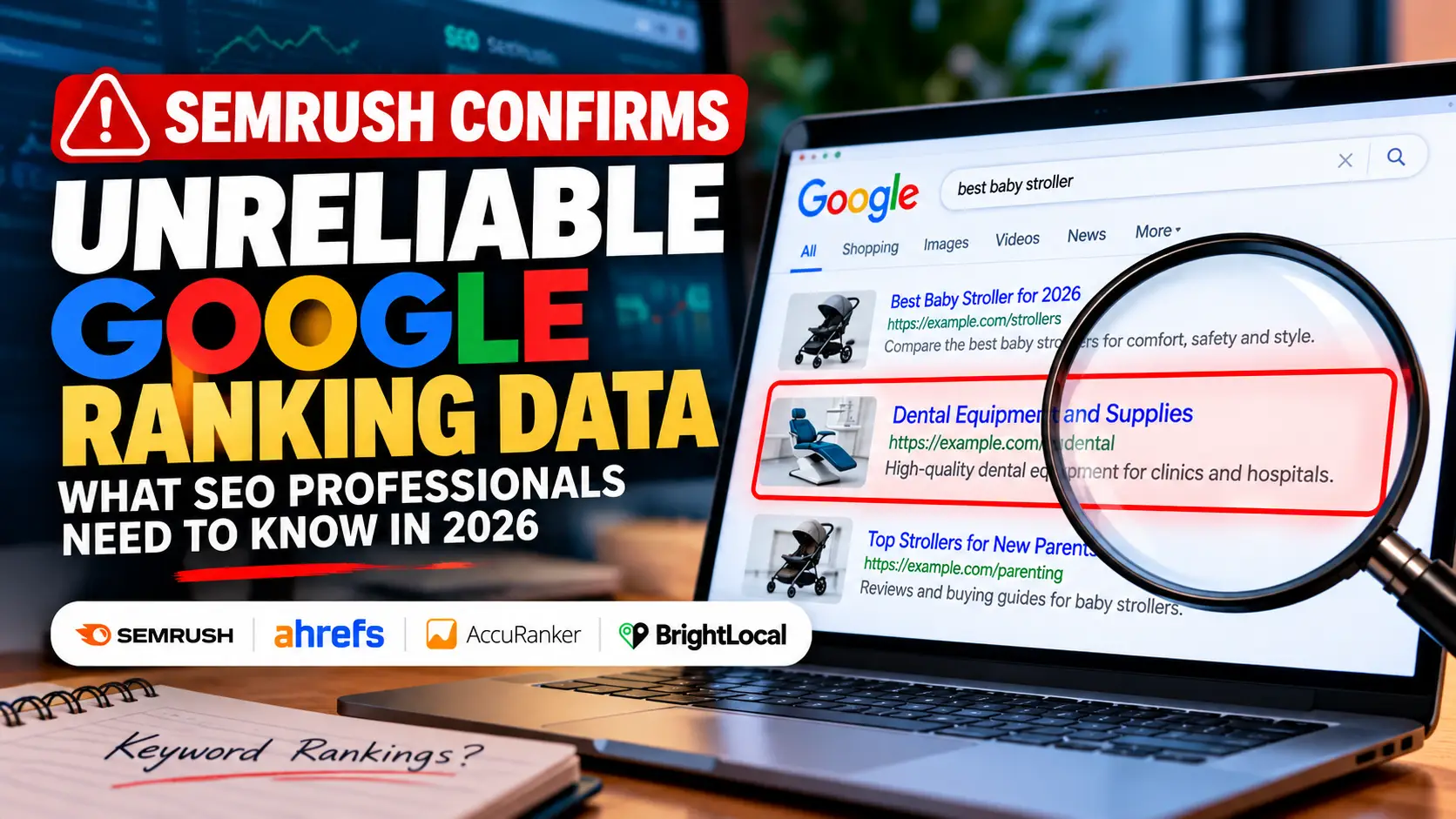
Google ranking reports are showing unusual fluctuations, and some of those changes may have nothing to do with a website’s actual search performance.
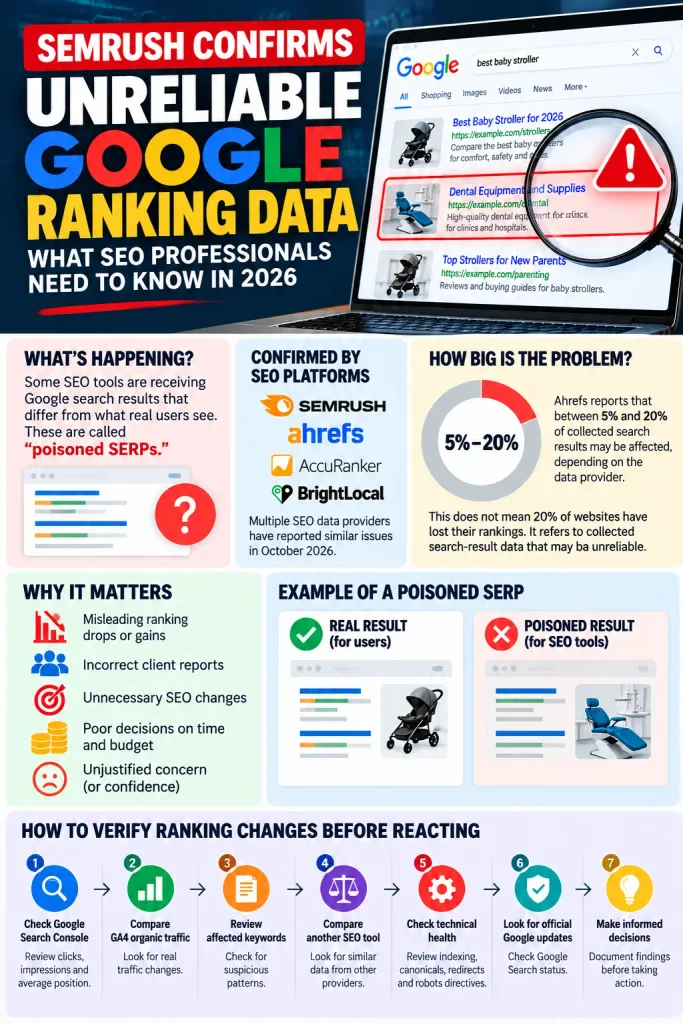
On October 27, 2026, Semrush publicly acknowledged that some automated SEO tools are receiving Google search results that differ from those shown to ordinary users. SEO professionals have described these abnormal results as “poisoned SERPs.” Other rank-tracking providers, including Ahrefs, have discussed similar data-quality problems.
For agencies, website owners, and digital marketers, the takeaway is important: a sudden drop in a rank-tracking dashboard does not necessarily mean your website lost that position in the searches real users see.
What Are Poisoned SERPs?
A SERP (search engine results page) is the list of results Google returns for a search. SEO tools use automated systems to collect those results and estimate where websites rank for particular keywords.
A “poisoned SERP” is a search-results page delivered to an automated collection system that contains unexpected, misleading, or irrelevant listings. Some abnormalities are obvious; others may appear only farther down the results page.
When those results are used for rank tracking, a tool may report an apparent ranking drop, improvement, or competitor movement that does not reflect the experience of ordinary search users.
What Semrush Said on October 27
Semrush acknowledged that the problem affects automated SEO data collection and described steps to identify and exclude suspicious results, validate its data, and recollect unreliable results. Its advice includes cross-checking unusual ranking movements against first-party information, especially Google Search Console.
Important distinction: SEO vendors have documented abnormal results, but Google has not publicly confirmed that it is deliberately manipulating search results to disrupt rank trackers. Explanations involving anti-scraping measures remain theories unless independently substantiated.
Read the Semrush statement about poisoned SERPs.
How Widespread Is the Ranking-Data Problem?
Ahrefs also discussed the issue in October 2026 and reported that the proportion of affected collected results may vary significantly by data provider. The figures discussed in industry reporting should not be interpreted as the percentage of websites that have lost rankings.
Data quality can vary by provider, collection method, search location, keyword, and time period. Even if a subset of collected results is inaccurate, it does not follow that every SEO report from that provider is unreliable.
Why It Matters to SEO Agencies and Website Owners
Imagine a WordPress website that normally appears around position four for an important keyword. A rank tracker suddenly reports position 38.
The agency might assume a Google update, technical problem, or competitor has caused a major decline. It may be tempted to rewrite a successful page, change internal links, or modify metadata immediately.
But if the ranking tool collected an abnormal SERP, the apparent decline may be a measurement error. Reacting without verification could waste resources and even damage an otherwise successful SEO strategy.
The same issue can affect client reports, competitor research, visibility estimates, and decisions about where to invest marketing budgets.
How to Check Whether a Google Ranking Drop Is Real
1. Review Google Search Console
Open Performance → Search results in Google Search Console. Compare clicks, impressions, click-through rate, and average position across the relevant dates. Narrow the analysis to affected queries and landing pages.
Search Console is based on your property’s Google Search performance, but average position is an aggregate measure, not a fixed live ranking for every searcher. Results can vary by device, location, and search context.
2. Check Organic Traffic in GA4
In Google Analytics 4, review organic search sessions and engagement for the affected landing pages. A sharp rank-tracker decline without a corresponding change in Search Console or organic traffic warrants closer investigation before making changes.
Traffic is not a perfect substitute for ranking data. Search demand, seasonality, and changes in search-result features can also affect clicks.
3. Inspect the Affected Keywords
Look for patterns: unrelated pages appearing for a keyword, many keywords moving unexpectedly on the same day, or rankings that return to normal without changes to your site. These are reasons to verify the data, not proof of a poisoned SERP.
4. Compare Independent Sources
Compare the keyword in another rank tracker if available. Multiple tools agreeing can improve confidence, but providers may encounter the same collection problem, so agreement is not conclusive.
5. Rule Out Real Technical SEO Problems
Check indexing, canonical tags, robots directives, redirects, server availability, and recent site changes. Also review the Google Search Status Dashboard for relevant incidents.
Not every ranking drop is a data error. Genuine SEO declines still happen and deserve investigation.
SEO Verification Checklist
- Compare affected queries and pages in Google Search Console.
- Review organic sessions and engagement in GA4.
- Check whether the ranking movement is isolated or widespread.
- Compare a second rank-tracking provider where possible.
- Verify indexing, canonical URLs, redirects, and robots directives.
- Review Google Search status and recent website deployments.
- Document the evidence before changing your SEO strategy.
What Should Agencies Tell Their Clients?
Explain that some third-party ranking measurements may be less reliable during the affected period. Do not silently remove suspicious data or claim a confirmed Google penalty based on a single report.
A good client report distinguishes among ranking estimates, Search Console performance, GA4 traffic, and business outcomes such as leads or sales.
| Metric | What It Measures | Key Limitation |
|---|---|---|
| Keyword rankings | Estimated position for tracked searches | Can be affected by abnormal SERP collection |
| Search Console clicks | Clicks from Google Search | Not every search interaction is a visit |
| Search Console impressions | Eligible appearances in Google Search | Not equivalent to sessions |
| GA4 organic sessions | Visits attributed to organic search | Depends on analytics and attribution setup |
| Leads and conversions | Measurable business outcomes | Requires reliable conversion tracking |
Should You Stop Using Semrush or Ahrefs?
No automatic switch is necessary. Both vendors have acknowledged data-quality concerns and described mitigation measures. Rank trackers remain useful for monitoring trends, researching competitors, and identifying keyword opportunities.
The sensible change is to avoid treating one keyword-position reading as definitive proof of a performance change. Confirm major movements against first-party data and technical evidence.
Does This Affect WordPress Websites?
Indirectly, yes. The issue is not specific to WordPress, Elementor, Rank Math, Yoast SEO, or any other CMS or plugin. It affects the external tools used to estimate search rankings.
A WordPress site may be indexed correctly and receiving normal Google traffic even while a third-party dashboard reports an unusual decline. Reinstalling plugins, changing permalinks, or rewriting content will not fix inaccurate external rank-tracking data.
Is Google Deliberately Poisoning SEO Tools?
That remains unconfirmed. Vendors have documented abnormal results delivered to automated systems, but Google’s intent has not been established publicly. Some observers speculate about anti-scraping measures, yet speculation should not be reported as fact.
There is also no basis to call this a Google core algorithm update or a penalty against websites that use SEO tools.
Frequently Asked Questions
Is Semrush showing incorrect Google rankings?
Semrush has acknowledged that some automated ranking data can be affected by abnormal search results. That does not mean every Semrush report is inaccurate.
Is Ahrefs affected too?
Ahrefs has discussed similar issues with collected Google search results and its efforts to identify unreliable data.
What does “poisoned SERP” mean?
It refers to a search-results page collected by an automated system that contains unexpected or misleading results compared with ordinary search experiences.
Is Google Search Console more reliable than rank trackers?
For understanding your own site’s Google Search performance, Search Console is a valuable first-party reference. Its average position remains an aggregate metric, not an exact ranking for every user.
Should I change my SEO strategy after a reported ranking drop?
First check Search Console, organic traffic, indexing health, and other evidence. Make substantial changes only after establishing that a genuine issue exists.
Will Google fix the issue?
There is no confirmed public commitment from Google to change the behavior. SEO vendors are implementing their own checks and filtering measures.
Final Thoughts
The October 2026 controversy is a reminder that SEO dashboards provide measurements and estimates—not an infallible view of Google Search.
Verify ranking changes before reacting. Use Google Search Console, GA4, technical checks, and business outcomes together. A strong SEO strategy should be guided by reliable evidence, not a single alarming position number.
Sources and References
- Semrush — Poisoned SERPs: An Update on Google Ranking Data (October 27, 2026).
- Ahrefs — Search Result Data Update (October 2026).
- Search Engine Land — Semrush Confirms Poisoned Google Results Are Impacting SEO Tools (October 27, 2026).
- Google Search Console — Official Website.