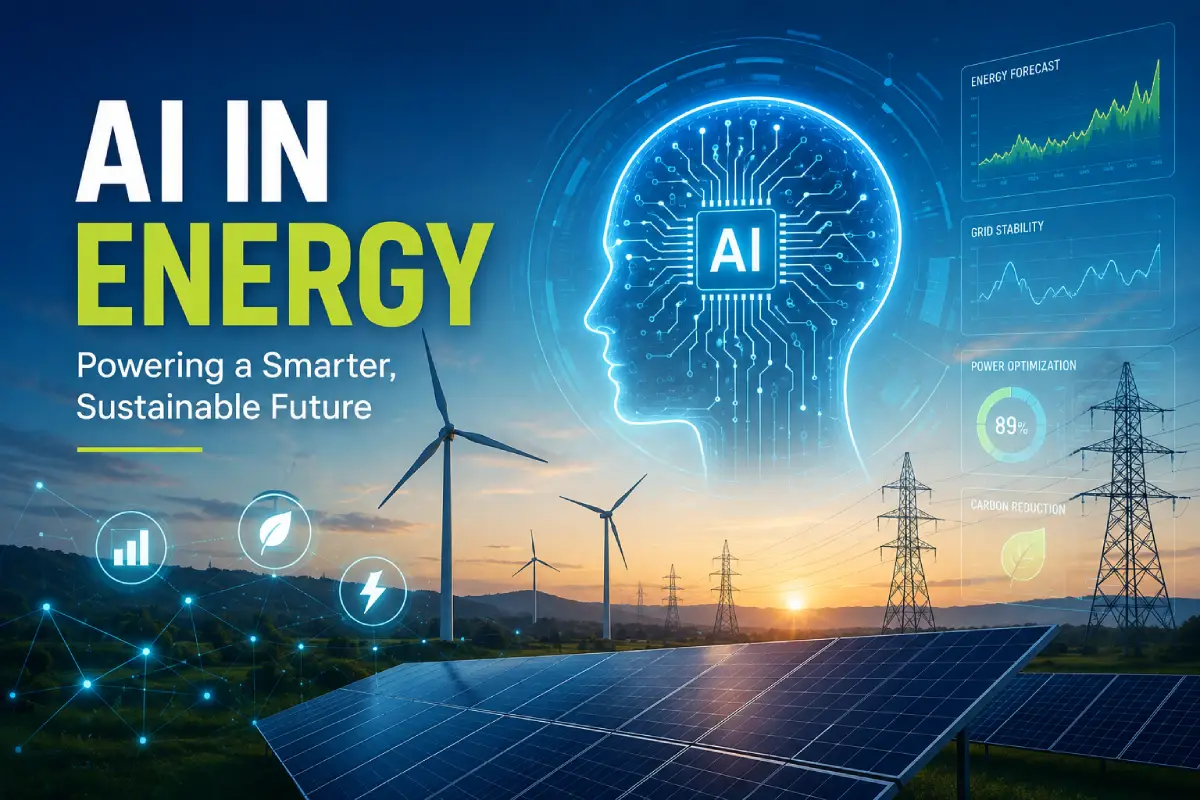
AI or Artificial intelligence is changing nearly every industry, and the energy sector is no exception. From predicting electricity demand to optimizing renewable energy production, AI in energy is helping utilities, businesses, and consumers make smarter decisions while reducing costs and carbon emissions.
As countries invest in cleaner energy and modernize aging infrastructure, AI is becoming an essential technology for creating more efficient, reliable, and sustainable power systems.
What Is AI in Energy?
AI in energy refers to the use of artificial intelligence, machine learning, and advanced analytics to improve how energy is generated, distributed, stored, and consumed.
AI systems analyze massive amounts of data from smart meters, power plants, weather forecasts, sensors, and electrical grids. These systems identify patterns and make real-time decisions that humans cannot process as quickly.
The result is better operational efficiency, lower costs, and improved energy reliability.
How AI Is Used in the Energy Industry
1. Smart Grid Management
Modern power grids are becoming increasingly complex as renewable energy sources such as solar and wind are added to the network.
AI helps utilities by:
- Predicting electricity demand
- Detecting outages faster
- Balancing electricity supply and demand
- Preventing grid overloads
- Optimizing power distribution
Smart grids powered by AI can automatically respond to changing conditions, improving stability while reducing power interruptions.
2. Renewable Energy Forecasting
Renewable energy depends heavily on weather conditions.
AI analyzes:
- Weather forecasts
- Historical climate data
- Cloud movement
- Wind patterns
- Solar radiation
These predictions help operators estimate how much renewable energy will be generated hours or even days in advance.
More accurate forecasts make renewable energy more reliable and reduce dependence on fossil fuel backup plants.
3. Predictive Maintenance
Equipment failures in power plants and electrical infrastructure can be expensive.
Instead of waiting for equipment to fail, AI monitors sensors installed on:
- Turbines
- Transformers
- Wind farms
- Solar farms
- Transmission lines
Machine learning identifies early warning signs of equipment wear before breakdowns occur.
Benefits include:
- Less downtime
- Lower maintenance costs
- Longer equipment lifespan
- Improved worker safety
4. Energy Efficiency
Commercial buildings consume enormous amounts of electricity.
AI-powered building management systems automatically adjust:
- Air conditioning
- Heating
- Lighting
- Ventilation
- Equipment schedules
These adjustments reduce unnecessary energy use while maintaining occupant comfort.
Many smart office buildings already save 15%–30% in energy consumption using AI-based optimization.
5. Demand Response
Electricity demand changes throughout the day.
AI predicts peak demand periods and helps utilities encourage consumers to reduce electricity usage during those times.
For example:
- Smart thermostats temporarily reduce cooling.
- EV charging schedules shift to off-peak hours.
- Industrial facilities delay non-critical processes.
This reduces stress on the electrical grid without building new power plants.
6. Energy Storage Optimization
Battery storage is becoming critical as renewable energy grows.
AI decides:
- When batteries should charge
- When they should discharge
- Which energy source should be prioritized
- How to maximize battery lifespan
This improves the overall efficiency of renewable energy systems.
Benefits of AI in Energy
Lower Operating Costs
Automation reduces manual work, improves maintenance scheduling, and minimizes wasted energy.
Increased Reliability
AI identifies problems before they become major outages.
Better Renewable Integration
Solar and wind become easier to manage using AI-powered forecasting.
Reduced Carbon Emissions
Improved efficiency means less fuel consumption and lower greenhouse gas emissions.
Improved Customer Experience
Consumers receive:
- More accurate billing
- Faster outage notifications
- Personalized energy-saving recommendations
Challenges of AI in Energy
Although AI offers major benefits, there are still challenges.
Data Quality
AI requires large amounts of clean, accurate data.
Cybersecurity
Connected energy infrastructure creates additional cybersecurity risks that utilities must address.
High Initial Investment
Deploying AI requires investments in:
- Sensors
- Smart meters
- Cloud infrastructure
- Software
- Skilled personnel
However, long-term savings often outweigh the upfront costs.
Regulatory Compliance
Energy companies must ensure AI systems comply with government regulations regarding reliability, privacy, and environmental standards.
Real-World Examples of AI in Energy
Renewable Energy
AI predicts wind turbine output and solar panel performance using weather data.
Electric Utilities
Power companies use AI to identify faults before outages occur and restore electricity more quickly.
Smart Homes
Smart home devices learn user behavior and automatically reduce unnecessary electricity usage.
Industrial Manufacturing
Factories use AI to optimize machinery schedules, lowering electricity consumption during production.
The Future of AI in Energy
The future of AI in energy looks promising.
Emerging technologies include:
- Autonomous power grids
- AI-managed microgrids
- Virtual power plants
- Advanced battery optimization
- Carbon emission forecasting
- Intelligent electric vehicle charging networks
As computing power continues to improve, AI will play an even larger role in helping countries achieve net-zero emissions while meeting growing electricity demand.
Final Thoughts
AI is no longer a futuristic concept in the energy industry. It is already helping utilities improve reliability, lower costs, integrate renewable energy, and reduce environmental impact.
As energy systems become increasingly digital, organizations that embrace AI will be better equipped to manage the transition toward cleaner and smarter power generation.
Whether it’s predicting equipment failures, balancing electricity demand, or optimizing renewable energy production, AI in energy is becoming one of the most important technologies shaping the future of the global power industry.
Frequently Asked Questions
What is AI in energy?
AI in energy is the application of artificial intelligence and machine learning to improve energy generation, distribution, storage, and consumption through data-driven automation and predictive analytics.
How does AI improve renewable energy?
AI predicts weather conditions, forecasts solar and wind power output, optimizes battery storage, and balances renewable electricity within the power grid.
Can AI reduce electricity costs?
Yes. AI improves energy efficiency, reduces equipment failures, optimizes maintenance, and minimizes wasted electricity, helping businesses and utilities lower operating costs.
Is AI used in smart grids?
Yes. AI enables smart grids to monitor electricity demand, detect outages, optimize power flow, and automatically respond to changing grid conditions in real time.