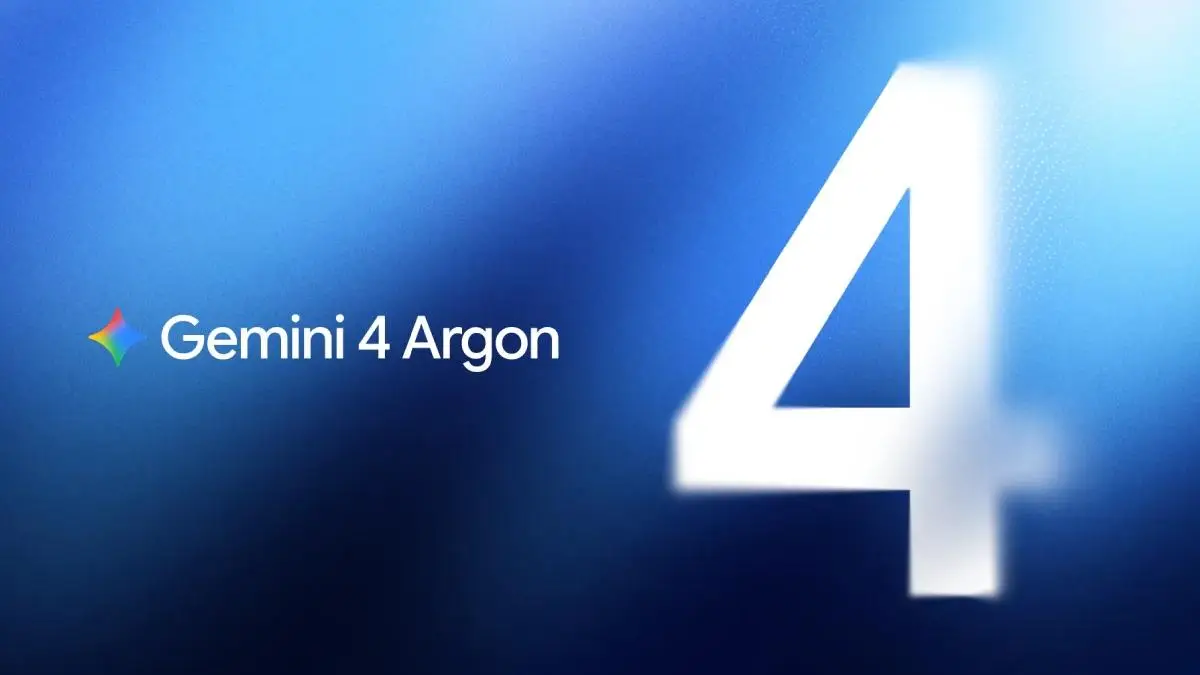
Google has officially launched Gemini 4 Argon, its latest flagship AI reasoning model, bringing advanced capabilities for software engineering, scientific research, cybersecurity, business analysis and autonomous AI agents. Released more broadly on October 13, 2026, Argon is available through Google’s paid developer API and selected Google AI subscriptions.
For web developers, SEO professionals, digital marketers and Philippine businesses, the important question is practical: can this model solve difficult problems reliably, reduce repetitive work and justify its cost?
What Is Google Gemini 4 Argon?
Gemini 4 Argon is a multimodal reasoning model developed by Google DeepMind. It is designed for complex, multi-step tasks requiring careful planning, large amounts of context and tool use. Google describes it as a model for demanding software engineering, mathematics, science, enterprise knowledge work and cybersecurity defense.
Unlike a simple chatbot that responds to one prompt at a time, an application built around Argon can coordinate multiple steps, call approved tools, examine their results and continue toward a defined goal. The model does not automatically receive access to your computer, websites or business accounts: developers must configure those integrations and permissions.
Gemini 4 Argon Specifications and Features
| Feature | Details |
|---|---|
| Developer | Google DeepMind |
| Broad release | October 13, 2026 |
| API model ID | gemini-4-argon |
| Supported input | Text, images, video, audio and PDF |
| Output | Text, including code |
| Unified context limit | 1,048,576 input and output tokens combined |
| Default synchronous maximum output | 65,536 tokens |
| Extended output | Up to 1,048,576 tokens with long decode and appropriate configuration |
| Reasoning settings | Low, medium and high |
| Tools | Function calling, code execution, file search, search grounding and computer use (preview) |
| Image generation | Not supported directly by this model |
The large context window can be useful when analyzing code repositories, extensive documents and complex project requirements. However, more context does not guarantee perfect recall or accuracy. Google’s official model documentation provides the latest technical specifications.
1. What Gemini 4 Argon Means for Software Developers
AI-assisted programming is moving beyond writing isolated functions. Modern coding agents can inspect multiple files, propose changes, run tests and revise their output. Gemini 4 Argon is intended for these longer engineering workflows.
Google reports that its internal engineering teams used Argon for demanding code tasks, and reported increases in agent-generated code submissions alongside fewer rollbacks. These are Google’s own observations, not a guarantee that every development team will achieve similar results.
Practical WordPress Development Use Cases
- Debugging: Investigate PHP warnings, JavaScript errors, plugin conflicts and failed AJAX or REST requests.
- Custom plugin development: Draft and review WordPress hooks, shortcodes, custom post types, REST endpoints and integrations.
- Elementor projects: Review custom CSS and JavaScript, identify performance bottlenecks and help troubleshoot dynamic templates.
- Website migrations: Plan changes to themes, custom fields and legacy PHP code while identifying compatibility risks.
- Quality assurance: Generate test cases, analyze error logs and document changes before deployment.
For example, a developer maintaining several WordPress websites could ask an AI assistant to analyze a recurring form-submission failure, compare the affected plugin code and recommend a testable fix. The developer would still need to validate the diagnosis on staging before changing the live website.
2. Autonomous AI Agents: From Answers to Completed Tasks
One of Argon’s most significant features is support for agentic workflows. Instead of asking for a single answer, a user can assign a goal that requires several operations.
Example: Diagnosing a Broken Website Form
- A developer describes the problem and provides relevant logs or access to approved tools.
- The AI analyzes the form configuration, custom scripts and possible server errors.
- It proposes a likely cause and suggests a code or configuration change.
- It runs available tests in an isolated environment.
- A human reviews the results and approves any production deployment.
This is an illustrative workflow, not an automatic built-in WordPress feature. Actual functionality depends on the agent framework, integrations and permissions. Google provides an Interactions API for developers building these systems.
3. Cybersecurity and Defensive Research
Cybersecurity is a major focus of Gemini 4 Argon. Google initially limited access to selected defenders through its Fairwind Program before broadening the release. The company says security researchers have used the model to identify vulnerabilities that earlier systems missed.
Google cited work by Wiz involving a serious issue in hospital software as an example of the model’s defensive potential. This is a Google-reported case and should not be treated as proof that Argon can find every vulnerability.
How Website Owners Could Benefit
- Review custom WordPress code for missing authorization checks and unsafe input handling.
- Analyze plugin vulnerabilities and prioritize updates.
- Investigate suspicious server logs and unusual requests.
- Audit API authentication and access permissions.
- Prepare remediation plans for confirmed security issues.
AI security reviews should supplement, not replace, patch management, backups, access controls, monitoring and professional security testing. Stronger AI systems also introduce misuse and prompt-injection risks, which Google discusses in its safety announcement.
4. Gemini 4 Argon for SEO and Digital Marketing
Gemini 4 Argon is not a Google Search ranking update. Its release does not mean websites using Argon will automatically rank higher. Its potential value to marketers lies in research, analysis and workflow automation.
Technical SEO Audits
An AI-assisted workflow could examine crawl exports, identify broken links, compare metadata, review structured data and suggest improvements to website architecture. Results still require human validation.
Search Console and Analytics Reporting
With authorized integrations, an agent could compare Google Search Console impressions and clicks against GA4 conversions, identify unusual changes and draft a report explaining possible causes. It should not claim causation from correlation alone.
Content Research and Editorial Planning
Argon can assist with topic research, outlining, identifying gaps in existing content and reviewing competing pages. Publishers should add original reporting, expertise, examples and fact-checking rather than relying on mass-produced generic articles.
Agency Automation
Digital agencies could experiment with recurring client reports, site-health checks, campaign summaries and internal documentation. Before deployment, they should assess the reliability of each workflow and protect client information.
5. Gemini 4 Argon API Pricing
Google has announced introductory pricing through November 30, 2026. Standard rates are scheduled to increase on December 1, 2026.
| API usage | Through November 30, 2026 | From December 1, 2026 |
|---|---|---|
| Input, per 1 million tokens | US$2 | US$4 |
| Output, per 1 million tokens | US$10 | US$20 |
| Implicitly cached input, per 1 million tokens | US$0.10 | US$0.20 |
Output billing includes thinking tokens. Other tool or service charges may apply depending on the implementation. See the official Gemini 4 Argon developer guide for current terms.
Sample Cost Calculation
At the introductory rates, a workflow using 500,000 input tokens and 100,000 output tokens would cost approximately US$2 in model token charges: US$1 for input and US$1 for output. This is an illustrative estimate, not a quote for a particular application.
Long-running agents can repeatedly call tools and consume more tokens than a simple chatbot request. Developers should set usage limits, monitor spending and test with representative workloads.
6. Gemini 4 Argon vs ChatGPT and Claude
Google’s new model competes with advanced systems from OpenAI and Anthropic. All three ecosystems offer sophisticated reasoning and developer workflows, but their capabilities, integrations, pricing and access conditions differ.
| Consideration | Gemini 4 Argon | OpenAI GPT models | Anthropic Claude |
|---|---|---|---|
| Complex reasoning | Major focus | Available, model-dependent | Available, model-dependent |
| Coding workflows | API and Antigravity | APIs and coding tools | APIs and coding tools |
| Multimodal input | Text, images, audio, video and PDF | Varies by model | Varies by model |
| Tool-based agents | Supported | Supported | Supported |
| Pricing | Published Argon token rates | Depends on model and service | Depends on model and service |
There is no single model that is best for every use case. A fair comparison should run the same tasks on each model and measure correctness, security, completion time, token usage and human review effort. Google’s benchmark leadership claims should be considered alongside independent testing.
7. How to Access Gemini 4 Argon
- Gemini app: Google AI Pro and Ultra subscribers can access Argon, subject to product availability and limits.
- Gemini API: Developers can use the paid API tier.
- Google AI Studio: Available to eligible users, including Google AI Ultra subscribers, under Google’s access rules.
- Google Antigravity: Available to eligible Google AI Ultra subscribers.
- Google Cloud: Available for supported enterprise workflows.
Important: Google’s developer documentation says Gemini 4 Argon is not available on the API Free tier or through the Google AI Pro plan’s developer entitlement. That does not contradict Pro subscribers having access to Argon inside the consumer Gemini app; the subscriptions and API billing are separate.
Developers can begin with Google AI Studio and the official setup guide. Keep API credentials on the server, restrict permissions and test on staging systems.
8. Opportunities for Philippine Businesses
Small and medium-sized Philippine businesses often need to manage websites, marketing, customer inquiries and reporting with limited teams. AI systems such as Argon could support selected processes, particularly where work is repetitive but still requires analysis.
- Web development agencies: Code review, troubleshooting, QA and documentation.
- Digital marketing teams: Performance analysis, content briefs and client reporting.
- E-commerce stores: Product data cleanup, internal research and customer-support workflows.
- Professional services: Document review and research with appropriate confidentiality controls.
- IT teams: Log analysis, operational runbooks and defensive security assistance.
Companies should begin with a narrow pilot, compare results against manual work and measure actual savings. When processing personal data, organizations should assess obligations under the Philippine Data Privacy Act and their own data-handling agreements.
9. Limitations and Risks
Incorrect Answers and Code
Even an advanced reasoning model can generate incorrect facts, insecure code or faulty explanations. Human review remains essential for high-impact decisions.
Long Context Is Not Perfect Memory
A large token window enables bigger inputs but does not guarantee that every relevant detail will be used correctly.
Agent Permissions Can Create Risk
AI agents connected to production systems can make mistakes. Use least-privilege access, staging environments, audit logs and approval steps for consequential actions.
Operating Costs Can Grow
Complex tasks may require multiple calls and lengthy reasoning. Test the cost per completed task rather than comparing only headline token prices.
Confidentiality and Privacy Matter
Do not submit sensitive client data, proprietary code or personal records without reviewing the service’s terms, access controls and organizational policies.
10. Why This Launch Matters for the Future of AI
Gemini 4 Argon reflects a broader shift from AI systems that primarily generate answers toward systems that help complete multi-step work. Developers can increasingly use AI to investigate software issues, marketers can automate parts of their analysis and businesses can test workflows that combine reasoning with approved tools.
The real measure of progress is not how impressive a demonstration looks. It is whether a system consistently completes useful tasks with acceptable accuracy, security, cost and human oversight.
Final Thoughts: Is Gemini 4 Argon Worth Trying?
Gemini 4 Argon is a significant addition to Google’s AI lineup, especially for complex coding, research, cybersecurity defense and agent-based applications. Its large context capacity and developer tools make it worth evaluating for demanding workloads.
For WordPress developers and digital marketing professionals, a sensible starting point is a small, measurable experiment: review a custom plugin, analyze an SEO export or automate one internal reporting task. Compare the result with existing tools before expanding.
The opportunity is not to replace professional judgment. It is to use AI to reduce repetitive work while improving the speed and quality of decisions.
Frequently Asked Questions
When was Gemini 4 Argon released?
Google expanded availability to developers, businesses and eligible subscribers on October 13, 2026, following an earlier restricted rollout.
Is Gemini 4 Argon free?
Gemini 4 Argon is not available on the Gemini API Free tier. Access in the consumer Gemini app is available to eligible Google AI Pro and Ultra subscribers.
Can Gemini 4 Argon create WordPress plugins?
It can help generate and review WordPress PHP and JavaScript code. Developers should review, test and secure the results before production use.
Does Gemini 4 Argon generate images?
No. Google’s model documentation lists image input but not direct image generation for Argon.
Will using Gemini 4 Argon improve Google rankings?
Not automatically. It can support SEO research and audits, but rankings depend on many factors, including content quality and technical implementation.
Is Gemini 4 Argon better than ChatGPT or Claude?
That depends on the task. Compare real workloads and independent tests rather than relying on one company’s benchmark claims.
Sources and Further Reading
- Google: Gemini 4 Argon — Built to Solve Your Hardest Problems (October 13, 2026)
- Google: Gemini 4 Argon Is Now Available for Developers (October 13, 2026)
- Google AI for Developers: Gemini 4 Argon Model Specifications
- Google AI for Developers: Features, API Migration and Pricing
- Google: Gemini 4 Argon in the Gemini App (October 13, 2026)
- Google DeepMind: Gemini 4 Argon Model Card (October 13, 2026)
- Google: Developing Gemini 4 Argon Responsibly and Safely (October 13, 2026)